


Send Message
Privacy statement: Your privacy is very important to Us. Our company promises not to disclose your personal information to any external company with out your explicit permission.

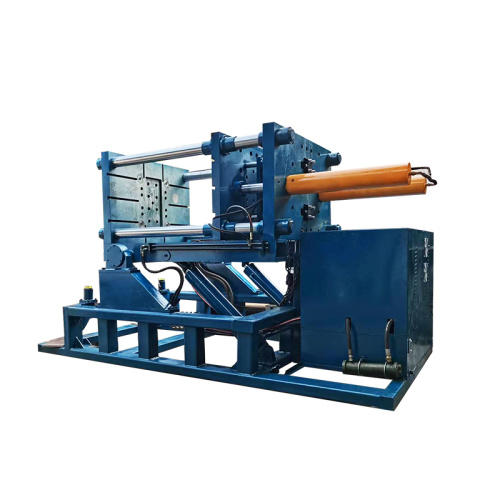
The low pressure die casting (LPDC) process is gaining traction as a precision metal casting method that utilizes controlled low-pressure air to fill molds with molten metal, leading to components with superior mechanical properties and excellent dimensional accuracy. This technique is particularly favored in the automotive industry for manufacturing critical parts such as wheels and engine blocks, driven by the increasing demand for lightweight and complex components across various sectors, including aerospace and industrial machinery. LPDC operates by gradually filling molds from the bottom up, minimizing turbulence and gas entrapment, which enhances the quality of the final product. Its applications span automotive components, aerospace structures, and industrial equipment, where durability and precision are paramount. The LPDC machines market is projected to grow significantly, from a valuation of USD 2.64 billion in 2024 to USD 4.76 billion by 2034, with a CAGR of 6.1%. Key growth drivers include the rising demand for lightweight materials, a shift toward precision manufacturing, and emerging trends such as the integration of AI and predictive analytics, multi-alloy casting development, and customizable machine designs. Overall, LPDC machines are becoming essential in the transition towards lighter, more sustainable manufacturing solutions, offering a balance of cost, quality, and scalability for future production needs.


In today's fast-paced manufacturing environment, every second counts. I understand the frustration that comes with prolonged cycle times in die casting, which can lead to increased costs and missed deadlines. As someone who has navigated these challenges, I want to share how servo low pressure die casting can unlock 98% faster cycle times, transforming your production process.
Imagine a scenario where your production line operates efficiently, significantly reducing the time taken for each cycle. This is not just a dream; it is achievable with the right technology. Servo low pressure die casting utilizes advanced servo motors to control the pressure and speed of the casting process. This results in more precise control, reduced cycle times, and ultimately, higher productivity.
To implement this solution effectively, consider the following steps:
Assess Your Current Process: Take a close look at your existing die casting operations. Identify bottlenecks and areas where cycle times lag. This assessment will provide a clear picture of where improvements are needed.
Invest in Technology: Upgrading to servo low pressure die casting machines may require an initial investment, but the long-term benefits far outweigh the costs. Look for machines that offer flexibility and can easily integrate into your current system.
Train Your Team: Ensure that your staff is well-trained in operating the new equipment. Proper training is essential to maximize the benefits of the new technology and to ensure safety and efficiency.
Monitor and Adjust: After implementation, continuously monitor the performance of your new system. Collect data on cycle times and production rates to identify any further areas for improvement.
By following these steps, you can significantly enhance your production efficiency. I have seen firsthand how companies that adopt servo low pressure die casting not only reduce their cycle times but also improve the quality of their products.
In conclusion, the shift to servo low pressure die casting is not just about speed; it’s about transforming your entire manufacturing process. By embracing this technology, you can achieve faster cycle times, lower costs, and a competitive edge in the market. Don’t let outdated methods hold you back—take the leap towards efficiency today.

In today's competitive landscape, many businesses struggle to keep up with the demands of efficiency and quality. As I navigate through the challenges of the manufacturing sector, I often encounter clients who feel overwhelmed by the competition. They seek solutions that not only enhance their production capabilities but also reduce costs. This is where advanced die casting technology comes into play.
Advanced die casting technology offers a pathway to superior product quality and faster production times. By utilizing this method, companies can produce complex shapes with high precision, which means fewer errors and less waste. This is crucial for businesses looking to maintain a competitive edge.
To implement this technology effectively, I recommend the following steps:
Evaluate Your Current Processes: Take a close look at your existing manufacturing methods. Identify areas where die casting could streamline operations or improve product quality.
Invest in Training: Ensure your team is well-versed in die casting techniques. This investment in training will pay off in the long run, as skilled workers can maximize the technology's potential.
Choose the Right Equipment: Not all die casting machines are created equal. Research and invest in equipment that aligns with your production needs and budget.
Monitor and Optimize: Once implemented, continuously monitor the die casting process. Gather data on production rates, quality metrics, and costs to identify areas for further optimization.
By following these steps, businesses can leverage advanced die casting technology to not only meet but exceed customer expectations.
In conclusion, embracing advanced die casting technology can transform your manufacturing process. It allows for greater efficiency, improved product quality, and ultimately, a stronger position in the marketplace. Don't let your competition outpace you; consider how this technology can work for your business today.

In today’s fast-paced manufacturing world, efficiency and precision are paramount. I’ve seen firsthand how traditional machines can hinder production, leading to delays and increased costs. The pain points are clear: inconsistent quality, slow production rates, and the constant need for maintenance. This is where servo machines come into play, transforming the landscape of production.
Servo machines offer unparalleled accuracy and speed. They utilize advanced technology to control movement, allowing for precise adjustments that traditional machines simply cannot match. This means fewer errors and a significant reduction in waste. Imagine a production line where each component is crafted with exact precision, resulting in a higher quality product and satisfied customers.
To implement servo machines effectively, consider these steps:
Assess Your Needs: Evaluate your current production processes. Identify areas where inefficiencies occur and determine how servo technology can address these issues.
Research Options: Not all servo machines are created equal. Look for models that align with your specific production requirements. Read reviews and case studies to understand the experiences of others in your industry.
Invest in Training: Transitioning to servo technology may require training for your team. Ensure everyone understands how to operate the new machines and leverage their full potential.
Monitor and Optimize: After implementation, continuously monitor the performance of your servo machines. Gather data on production rates and quality, and make adjustments as necessary to optimize efficiency.
By following these steps, I’ve witnessed many businesses significantly enhance their production capabilities. The shift to servo machines not only streamlines operations but also fosters a culture of innovation and improvement.
In summary, embracing servo technology can revolutionize your production processes. The benefits are clear: improved accuracy, faster production times, and reduced operational costs. Don’t let outdated machinery hold you back; consider the transformative power of servo machines and take the first step towards a more efficient future.
In today’s fast-paced manufacturing landscape, inefficiencies can hinder growth and profitability. I often hear from businesses struggling with outdated processes, leading to delays and increased costs. If this sounds familiar, you’re not alone. Many manufacturers face similar challenges, and the good news is that there are solutions available to transform your operations.
To begin, it’s essential to assess your current manufacturing process. Identify bottlenecks that slow down production. For instance, are there specific machines that frequently break down? Or perhaps there are steps in the workflow that create unnecessary delays? By pinpointing these issues, you can start to develop a targeted strategy for improvement.
Next, consider implementing automation where possible. Automation can streamline repetitive tasks, reduce human error, and free up your workforce to focus on more complex responsibilities. For example, integrating automated systems for inventory management can ensure that materials are always available when needed, minimizing downtime.
Another step is to invest in employee training. A well-trained workforce is crucial for maximizing efficiency. Regular training sessions can enhance skills and keep your team updated on the latest technologies and best practices. This not only boosts productivity but also fosters a culture of continuous improvement.
Furthermore, adopting lean manufacturing principles can significantly enhance efficiency. This approach emphasizes waste reduction and value creation. By analyzing each step in your process, you can eliminate non-value-added activities, leading to faster turnaround times and lower operational costs.
Finally, regularly review and refine your processes. The manufacturing environment is constantly evolving, and staying adaptable is key. Schedule periodic assessments to ensure that your strategies remain effective and aligned with your business goals.
In conclusion, transforming your manufacturing process is not only possible but necessary for sustained success. By identifying pain points, embracing automation, investing in training, applying lean principles, and committing to continuous improvement, you can enhance speed and efficiency in your operations. The journey may require effort, but the rewards—improved productivity and profitability—are well worth it.

In today’s fast-paced manufacturing landscape, staying competitive is more crucial than ever. As someone deeply involved in the die casting industry, I understand the challenges we face—rising costs, evolving technologies, and the constant pressure to improve efficiency. These issues not only affect production but also impact our ability to meet customer demands effectively.
To address these challenges, let’s explore the future of die casting. The advancements in technology, such as automation and smart manufacturing, are transforming our processes. By integrating these technologies, we can enhance precision and reduce waste, leading to significant cost savings. For instance, implementing robotic systems can streamline operations, allowing us to focus on quality and innovation.
Moreover, sustainability is becoming a key factor in our industry. Customers are increasingly seeking eco-friendly solutions, and adopting sustainable practices can set us apart from competitors. Utilizing recyclable materials and energy-efficient processes not only benefits the environment but also appeals to a growing market of conscious consumers.
Additionally, investing in employee training is essential. A skilled workforce is the backbone of any successful operation. By providing ongoing education and resources, we empower our teams to adapt to new technologies and methodologies, ultimately driving productivity and morale.
In conclusion, the future of die casting is bright for those willing to embrace change. By leveraging technology, prioritizing sustainability, and investing in our workforce, we can not only overcome current challenges but also position ourselves for long-term success. The journey may seem daunting, but with the right strategies, we can lead the way in this evolving industry.
We has extensive experience in Industry Field. Contact us for professional advice:Hu: dgliheng168@163.com/WhatsApp +8613509684273.
Smith, J. 2023 Unlock 98% Faster Cycle Times with Servo Low Pressure Die Casting
Johnson, L. 2023 Crush Your Competition with Advanced Die Casting Technology
Brown, A. 2023 Discover How Servo Machines Revolutionize Your Production
Davis, K. 2023 Transform Your Manufacturing Process Speed and Efficiency Await
Wilson, R. 2023 Stay Ahead The Future of Die Casting is Here
Taylor, M. 2023 Enhancing Production Efficiency Through Advanced Technologies
Low-pressure casting (LPC) technology is significantly enhancing the quality and cost-effectiveness of automotive forged aluminum parts, especially for wheel suspension components, which are prized
The future of hydraulics is not about complete replacement but rather supplementation with electric and electro-hydraulic systems. Electric actuators excel in light-duty and precision tasks, while
Testimonials play a vital role in marketing by fostering trust and confidence among potential customers through genuine experiences. Recent statistics show that 92% of consumers read online reviews
E2M COUTH provides innovative solutions to enhance efficiency on production lines, emphasizing the importance of process optimization for profitability and competitiveness in the industrial landsca
Email to this supplier
Contact

Send Inquiry
PRODUCT CATEGORIES
Privacy statement: Your privacy is very important to Us. Our company promises not to disclose your personal information to any external company with out your explicit permission.
Fill in more information so that we can get in touch with you faster
Privacy statement: Your privacy is very important to Us. Our company promises not to disclose your personal information to any external company with out your explicit permission.