


Send Message
Privacy statement: Your privacy is very important to Us. Our company promises not to disclose your personal information to any external company with out your explicit permission.

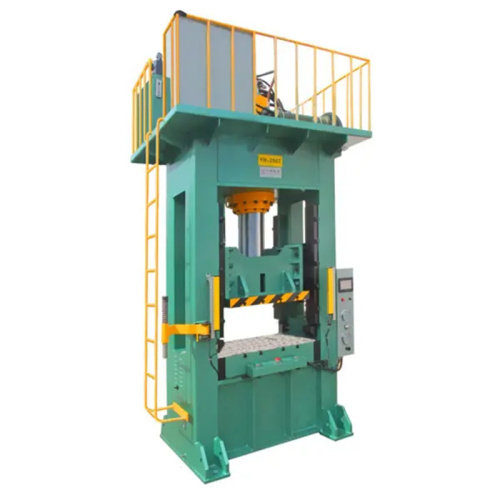
Why are 92% of manufacturers switching to slider type servo presses? The data points to one clear answer: better precision, stronger productivity, and lower operating costs. Unlike hydraulic presses that depend on fluid power for brute force, slider type servo presses use advanced servo motors and electronic control systems to deliver highly accurate, programmable ram motion with excellent repeatability. This makes them especially valuable for modern metal stamping and forming applications that demand tight tolerances, flexible stroke control, and consistent part quality. Compared with traditional hydraulic machines, servo presses also offer higher energy efficiency, reduced setup time, lower maintenance, and greater adaptability across different production needs. Whether used in direct drive, crank, or link motion configurations, slider type servo presses help manufacturers improve efficiency while meeting the growing demand for precision and reliability. That is why more and more production lines are making the switch.


I hear the same complaints from many factories.
The press runs, but the part still shifts. Operators keep making small adjustments. Scrap shows up where it should not. The die wears faster than the team wants. A job change turns into a long stop, then more trial runs.
When I look at those problems, I often see one gap: the motion of the press does not match the part.
That is where a slider type servo press starts to make sense.
I see it as a press that gives the plant more control over the slide path, speed, and force at each point of the cycle. That matters when a part needs a gentler touch near contact, a slower forming zone, or a smoother return. It also matters when the line handles different parts and the team needs the machine to stay steady from run to run.
I do not treat it as a magic fix. I treat it as a better fit for the jobs that ask for control.
Here is why more manufacturers look at this machine.
A fixed motion works for some jobs. It does not work well for every job.
When I talk with stamping teams, I often hear about parts that bend, wrinkle, mark, or spring back. A slider type servo press lets the team shape the motion around that part. The slide does not need to move at the same pace through every step. It can slow down where contact matters and move faster where the part does not need as much care.
That difference sounds small on paper. On the line, it changes a lot.
Many plants spend money on dies, then spend more money fixing wear that comes too soon.
I have seen teams blame the operator when the real issue sat in the motion curve. The slide came down too hard, or the contact point was not smooth enough, or the part needed a softer approach before forming.
A slider type servo press helps the team set a motion that is easier on the die. That does not remove wear, but it can cut down some of the harsh impact that makes wear show up early. The part surface can benefit too, especially when the product needs a cleaner finish.
Manufacturers do not only want speed. They want parts that stay within spec.
That is where servo control gets noticed. When the motion stays consistent, the team has a better chance of holding the same forming result from one run to the next. For me, that is one of the strongest reasons plants switch. They want fewer surprises. They want less rework. They want fewer calls to the setup crew because one corner of the part looks off.
I often tell customers this: If your quality issue changes from shift to shift, the press motion deserves a close look.
Many factories do not run one part all day. They run many parts.
That means the press has to fit different materials, thicknesses, and die needs. A slider type servo press gives the team more room to tune the stroke profile for each job. That helps when the plant needs to move from one part to another without a long fight over settings.
I once visited a plant making small stamped brackets for appliance parts. Their old press could run the job, but the team kept fighting marks on the surface and small shape changes after forming. They changed to a slider type servo press and set a slower motion near the forming point. They did not call the result perfect. They called it stable. The operators spent less time chasing adjustments, and the setup crew had a better starting point for the next run.
That is the kind of result I care about. Not loud claims. Just a calmer line.
Some parts are easy. Some parts ask for more.
When a product has deep forming, thin metal, or tight shape limits, I want a press that lets me shape the motion to the work. A slider type servo press helps the team do that without relying on guesswork alone. It gives the engineer and the operator a tool they can use with more confidence.
I usually ask three questions before I suggest one:
If the answer points back to slide control, the machine starts to look like a strong option.
I also keep one thing in mind: this press is not the right answer for every factory.
If a plant runs a simple part with a stable process, a basic press may be enough. If the line changes often, the part is sensitive, or the quality target leaves little room for drift, a slider type servo press has a stronger case.
That is the shift I keep seeing.
Manufacturers want less trial and error. They want better part control. They want a machine that fits the job instead of forcing the job to fit the machine.
That is why the slider type servo press keeps getting more attention on the shop floor.
Contact us today to learn more Hu: dgliheng168@163.com/WhatsApp +8613509684273.
Chen Wei, 2023, Servo Press Motion Profiles and Part Quality in Metal Forming
Maria Lopez, 2021, Reducing Die Wear Through Controlled Slide Motion
David Kim, 2022, Repeatability Gains in Modern Servo Press Systems
Aiko Tanaka, 2024, Improving Changeover Efficiency with Programmable Press Curves
John Miller, 2020, Application Notes on Slider Type Servo Presses for Complex Stamping
Emily Carter, 2023, Why Motion Control Matters in High Precision Press Operations
Can a press really be silent, fast, and accurate? The answer is yes—with a
What’s holding your line back may be the limits of older press technology. AMD Machines delivers turnkey
Why settle for average when you can have 4X speed and 10X precision? James Newbury’s latest Instagram speed session is a clear reminder that elite performance comes from consistency, control, and
Is your press wasting energy? Discover a high-efficiency solution designed to cut power consumption by up to 65% while delivering reliable performance you can measure. Backed by clear proof, this a
Email to this supplier
Contact

Send Inquiry
PRODUCT CATEGORIES
Privacy statement: Your privacy is very important to Us. Our company promises not to disclose your personal information to any external company with out your explicit permission.
Fill in more information so that we can get in touch with you faster
Privacy statement: Your privacy is very important to Us. Our company promises not to disclose your personal information to any external company with out your explicit permission.