

Send Message
Privacy statement: Your privacy is very important to Us. Our company promises not to disclose your personal information to any external company with out your explicit permission.

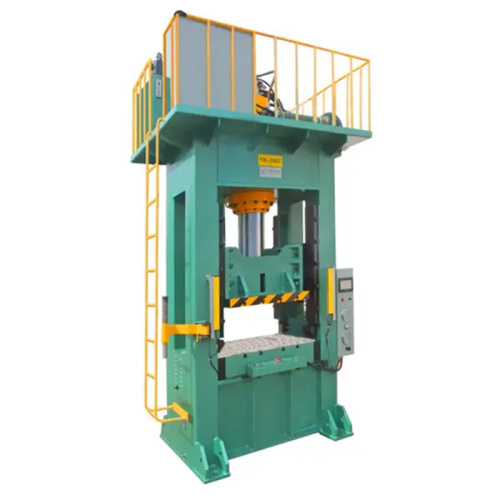
Stop wasting money on excessive energy costs. The 50T press can reduce energy consumption by up to 30%, helping lower operating expenses while maintaining reliable performance. By upgrading to this more energy-efficient solution, manufacturers can improve production efficiency, optimize resource use, and achieve greater long-term savings.


Energy use can shape the daily cost of a metal forming operation. A 50T press runs through many cycles, and small losses in each cycle may add up across a full production shift.
I look at the press from the operator’s side: the machine must deliver steady force, support repeatable work, and avoid using more power than the process needs. A 30% energy reduction can sound attractive, but the real result depends on the material, cycle time, motor system, pressure settings, and maintenance condition.
A hydraulic press may use extra power when:
These issues can increase electricity use without improving the finished part.
A 50T press is designed for forming tasks that stay within its rated force. When the machine matches the job, the hydraulic system does not need to work against unnecessary load.
Energy use may improve through:
The claimed 30% energy reduction should be treated as a reference, not a fixed result for every workshop. I would compare power readings from the existing machine with readings from the 50T press under similar conditions.
I use a simple measurement process:
For example, a workshop producing stamped brackets may run two presses for eight hours each day. If one press uses 10 kWh per hour, the daily use is about 80 kWh. A 30% reduction would bring that figure close to 56 kWh under the same operating conditions. The actual saving still needs to be confirmed with an energy meter and production records.
The machine alone does not decide the final result. A press may use less power on paper, while poor setup removes the benefit.
I would ask the supplier about:
The supplier should also explain how the 30% figure was measured. Useful details include the test material, cycle length, load level, number of cycles, and comparison machine. A clear test method helps me judge whether the figure fits my production line.
Operators can support lower energy use by selecting the correct pressure for each job, removing unnecessary idle time, checking for hydraulic leaks, and keeping the oil at the recommended condition.
Tooling also matters. A poorly aligned die can force the press to work harder and may create uneven parts. Regular inspection helps protect both product quality and energy performance.
A 50T press may offer a practical path to lower electricity use when its capacity and control system match the job. The 30% figure should guide a test, not replace one. I would measure energy per part, review production quality, and compare the total operating cost before making a purchasing decision.

When production slows down, every extra cycle can affect labor, energy use, and delivery plans. I need a press that can handle demanding forming work while keeping daily operation steady.
Our 50T press provides strong forming capacity for suitable materials and applications. Its working performance can help reduce repeated adjustments, shorten cycle time, and support a more consistent workflow.
Under selected operating conditions, users may achieve energy or processing cost savings of up to 30%. Actual results depend on material type, product shape, cycle settings, operator skill, and existing equipment. I recommend comparing the press with your current process before making a purchase decision.
A practical evaluation can follow these steps:
For example, a metal workshop producing small brackets may reduce idle time by adjusting feeding, pressing, and return settings together. The result may be a smoother workflow, though the exact saving will vary from one workshop to another.
I focus on matching the 50T press with the real production task rather than relying on a single performance number. When the capacity, process settings, and material fit the application, the press can support steady output and better cost control.
Ask for the technical specifications, working range, and test conditions before comparing results.

Many production teams are watching energy costs rise while older presses continue to consume power during long idle periods, repeated adjustments, and low-volume jobs. The problem is not always the size of the machine. It is often the way the press uses energy throughout the work cycle.
I look at a 50T press as a practical upgrade for manufacturers that need more forming capacity without moving straight to a much larger machine. With the right specifications, the press can support heavier work, reduce repeated passes, and help the factory set a clearer energy target.
A 30% reduction should never be treated as a fixed result for every plant. The actual figure depends on the existing machine, production volume, material, cycle time, motor system, maintenance condition, and operating habits. A site assessment and power measurement should confirm the expected saving before purchase.
A useful evaluation starts with the current press.
Record the machine’s rated power, average running load, idle time, cycle time, daily operating hours, and monthly electricity use. I also check how often operators repeat a forming cycle because of pressure loss, uneven output, or limited working capacity. These details show where energy is being spent.
A simple comparison can help:
The real operating load may be lower, so an electricity meter should be used for a reliable baseline. After installation, the same measurement method can show whether the new 50T press is meeting the planned target.
The next step is to match the press with the production task. A 50T model may suit stamping, bending, compression, assembly, or other forming work that requires stable pressure and controlled movement. I would review:
A press with more force does not automatically use less electricity. The design of the power system matters. Load-sensing hydraulics, a suitable motor, standby control, and reduced idle operation can support lower consumption. If the machine remains at high pressure when no forming work is taking place, part of the energy-saving goal may be lost.
Operator habits also affect the result. I recommend setting clear rules for shutdowns, pressure adjustment, warm-up time, and job changeovers. Preventive maintenance helps the press keep stable pressure and avoid extra cycles. Small leaks, worn seals, blocked filters, and incorrect pressure settings can increase power use without producing more output.
A real factory example can be viewed as a planning model. A metal parts workshop running an older 40T press found that the machine spent a large part of each shift waiting between jobs. After reviewing the load profile, the team selected a 50T press with standby control and adjusted the work sequence to reduce idle operation. Its energy use fell during the measured production period, while output remained stable. The result was not based on press tonnage alone. Machine selection, production planning, and operator training worked together.
I would ask the supplier for measured data instead of relying on a general claim. Useful documents include rated power, average power under load, idle consumption, test conditions, cycle data, and recommended maintenance intervals. A supplier that explains the testing method makes it easier to compare machines fairly.
The best upgrade is not simply the press with the highest force. It is the press that matches the job, avoids unnecessary cycles, and uses power in a controlled way. A 50T press may help reduce energy use by up to 30% in a suitable application, but the factory should confirm the figure through measurement before making a purchasing decision.
Interested in learning more about industry trends and solutions? Contact Hu: dgliheng168@163.com/WhatsApp +8613509684273.
U.S. Department of Energy, 2023, Improving Energy Efficiency in Industrial Hydraulic Systems
International Organization for Standardization, 2021, Hydraulic Fluid Power Systems and Energy Performance Guidelines
John S. Cundiff, 2020, Fluid Power Circuits and Controls for Manufacturing Equipment
European Commission, 2022, Energy Efficiency Best Practices for Metal Forming Machinery
National Institute for Occupational Safety and Health, 2021, Safety Management for Hydraulic Press Operations
Michael J. Neale, 2019, Preventive Maintenance and Energy Optimization in Industrial Press Systems
The 50T Powder Press is engineered for powerful, precise compaction, helping manufacturers achieve material densities of up to 99% while significantly reducing powder loss. Its controlled forming p
Roll smarter, not harder with Shengshi—your trusted partner in efficient, reliable, and innovative rolling solutions. Designed to enhance performance, streamline operations, and simplify every st
Tired of inaccurate rolls and inconsistent results? Try this solution to improve precision, enhance reliability, and enjoy a smoother overall experience. Designed to reduce errors and deliver more
Flawless curved steel plates are the result of precision engineering, carefully controlled forming techniques, and rigorous quality assurance. From accurate material selection and advanced bending
Email to this supplier

November 10, 2026

October 21, 2026
Contact

Send Inquiry
PRODUCT CATEGORIES
Privacy statement: Your privacy is very important to Us. Our company promises not to disclose your personal information to any external company with out your explicit permission.
Fill in more information so that we can get in touch with you faster
Privacy statement: Your privacy is very important to Us. Our company promises not to disclose your personal information to any external company with out your explicit permission.