


Send Message
Privacy statement: Your privacy is very important to Us. Our company promises not to disclose your personal information to any external company with out your explicit permission.

Our mobile low pressure casting technology is redefining production quality by delivering up to 97% fewer rejects, helping manufacturers achieve more consistent results, less waste, and higher efficiency on the shop floor. Designed for flexibility and precision, it brings stable casting performance wherever it’s needed, making it easier to improve output quality while reducing costly defects and rework. For businesses looking to boost productivity and maintain tighter control over casting results, this is not just an upgrade—it’s a smarter way to manufacture.


I used to see the same scene every week.
Boxes were ready, orders were packed, and then the check sheet came back with another round of rejects.
Some items had surface marks. Some failed size checks. Some looked fine at a glance, then failed at the last step.
That is where most teams get stuck. The reject rate goes up, costs rise, and everyone starts blaming the final inspection.
My view is simple: the real problem usually starts much earlier.
When I work with a production team, I look at three things first.
The first thing I check is the source of the error.
If the same defect keeps showing up, I do not treat it as bad luck. I ask where it begins. Is it the material? Is it the machine setting? Is it the handoff between shifts? One factory I saw kept losing parts because the packing stage used a tray that was slightly too loose. The parts shifted during transport, and small scratches kept showing up. The fix was not a big system change. A tighter tray and a short handling guide cut the issue fast.
The next thing I watch is the way people work with the same standard.
A lot of rejects happen because one person reads the rule one way and another person reads it another way. I have seen this in sample approval, label placement, and visual checks. A short photo guide often helps more than a long manual. When the team can see a good sample and a bad sample side by side, mistakes drop.
The third thing I focus on is feedback speed.
If a defect is found at the end of the line, the loss is already locked in. If the team catches it earlier, the damage stays small. I like simple check points during the process. Not too many. Just enough to stop a small issue from becoming a full batch problem.
I also think training matters more than many teams admit.
Not a long class. Not a heavy folder of rules. I mean short, practical training tied to the real work. Show the team what failed last week. Explain what to watch for. Let them touch the sample. Let them ask questions. People learn faster when the example feels real.
A real case stays in my mind. A small workshop I worked with had a high reject rate on finished items. The team thought the problem came from one weak worker. After review, we found the issue was a dim work area and a missing check step before packing. We changed the light, added one quick visual check, and asked the shift lead to confirm the first ten pieces each day. The reject count dropped, and the team felt less pressure right away.
That is why I do not like vague promises around quality.
I care about simple changes that a team can keep using. Better checks. Clear samples. Faster feedback. Honest review of each defect. These steps do not sound flashy, but they save waste and protect trust.
If I had to reduce rejects in any line, I would start small and stay close to the work. I would watch the process, not just the result. I would write down the same defect three times if it kept coming back. I would make the fix easy to see and easy to repeat.
That is how a team moves from blame to control.
Not by chasing a big claim.
By fixing the part that breaks most often, one step at a time.
When I work with casting projects, I often hear the same complaints.
The parts are needed, but the shop floor is crowded.
The mold is ready, yet the furnace sits too far away.
Material handling takes too much effort.
Quality changes from one run to the next.
The team wants stable results, but the setup feels fixed and hard to move.
That is where mobile low-pressure casting becomes useful.
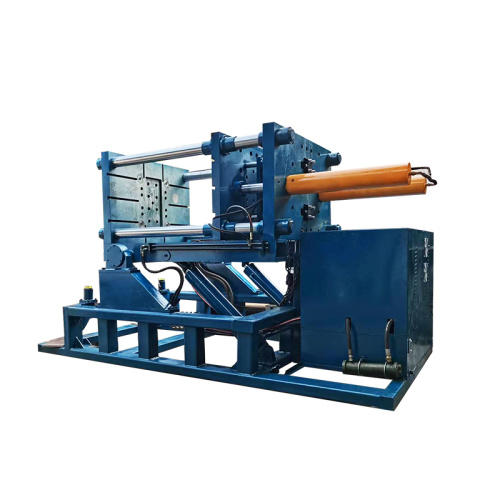
Mobile low-pressure casting is a casting setup that can be moved to match the work site. I see it as a practical answer for plants that need flexibility without giving up process control. It keeps the low-pressure casting method, while giving the team more freedom in layout and use.
What I like about this method is simple: I can place the casting unit closer to the work area, reduce unnecessary handling, and make the process easier to manage. When a production line changes often, this matters a lot. When the shop handles different aluminum parts, this matters even more.
In my view, the value shows up in daily work, not in fancy words.
A fixed line can work well when output is stable and the plant has enough space. A mobile setup fits better when the team needs short runs, trial parts, support for new product launch, or help with production on a limited floor area. I have also seen it used in places where a factory wants to test a casting process before building a larger line.
The process is still low-pressure casting at its core.
Molten metal is pushed into the mold with controlled pressure from below.
The filling is smoother than rough pouring.
The operator can manage flow more carefully.
The final part often needs less rework than a setup that is hard to control.
That said, mobile low-pressure casting is not a magic answer for every plant. I always look at the same points before I recommend it.
The alloy must match the process.
The mold must fit the part and the target surface quality.
The mobile unit must be easy to place, move, and service.
The team must understand safety, heat control, and maintenance.
The plant must also think about power, gas, cooling, and access space.
One real case comes to my mind.
A small aluminum parts supplier was making housings for a mechanical assembly line. The shop changed product types often, and the fixed casting area made each change feel heavy. The team spent too much time moving materials across the floor. After they introduced a mobile low-pressure casting setup, they placed the unit closer to the machining area and shortened the handling path. The work flow felt cleaner, and the operators had a much easier time keeping the process steady. I saw the difference most clearly in the way the team worked. They were less rushed, and the shop looked easier to manage.
This is why I pay attention to layout before I talk about output.
A casting process is not only about making a part. It is also about how people move, how material flows, and how much time gets lost between steps. Mobile low-pressure casting gives me more room to design around the real work, not only the machine.
If I had to explain it in plain words, I would say this:
When a plant needs more flexibility, less handling, and a casting method that can move with the work, mobile low-pressure casting is worth a close look.
When the project needs stable aluminum casting and a cleaner shop flow, this setup can fit well.
When the team wants a practical solution for changing production needs, it gives them more room to work.
I always tell clients to compare their part size, batch type, floor space, and maintenance plan before they decide. That simple check saves time and avoids wrong choices.
Mobile low-pressure casting works best when the process and the shop layout support each other. I have found that this is where the real value begins.

I see the same pain point again and again in shops I work with: good material goes in, but too much ends up as scrap. That hurts output, raises cost, and makes planning harder. A line can look busy and still lose money if the scrap rate stays high.
I take a simple view. Less scrap means more parts, more stable delivery, and less pressure on the team. I do not treat scrap as a normal cost of doing business. I treat it as a signal. Something in the material, process, setup, or handling needs attention.
When I talk with a plant manager, I usually start with the waste map.
I ask a few direct questions:
This step matters because many teams try to fix scrap with guesses. That wastes more time. I prefer to look at the pattern first. If a machine produces good parts for most of the day, then the issue may sit in setup or tool wear. If scrap rises after each changeover, the team may need a tighter setup check. If parts get damaged after inspection, the problem may be in packing or movement, not production.
Here is the way I usually work through it.
A single number can hide the real issue. I separate scrap into categories:
This gives me a cleaner picture. A plant may think it has a material problem, when the real issue is poor fixture control. Another plant may blame operators, when the issue is a worn tool that should have been replaced earlier.
I have seen many cases where the process was fighting the design. A part with tight bends, weak corners, or poor nesting layout can create extra waste before production even starts. If the layout on the sheet or bar stock is weak, scrap grows fast.
A small change can help a lot. I once reviewed a metal shop that was losing a large amount of sheet material on a repeated bracket job. The team had accepted the layout as fixed. I asked for a new nesting plan and a check on hole placement. We found enough unused space to add parts per sheet without changing the product spec. The team did not need a big investment. It needed a better plan.
Many scrap problems begin at the start of a run. If the first piece is off, the rest of the batch can follow. I ask teams to slow down during setup and confirm the key points:
I like first-piece checks because they catch small drift early. A machine that is slightly off can still make parts. Those parts may look fine at a glance, yet fail later. The team then pays twice: once for scrap, once for delay.
I have worked with production teams that replaced tools only after defects appeared. That habit is costly. Tool wear does not always show up as a sudden failure. It often starts with a small change in edge quality, cut depth, or part size. The scrap rises slowly, then all at once.
A good check list helps:
This kind of record gives the team a better chance to act before the scrap pile grows.
Some scrap comes from people moving parts, stacking parts, or packing parts. I have seen good parts scratched by rough trays, mixed by poor labeling, and bent by careless stacking. The machine was not the problem. The handoff was.
I like to keep handling rules simple:
These steps are plain, yet they save a lot of usable parts.
I do not ask teams to drown in reports. I ask for one short daily review:
A five-minute review can point to a trend before it becomes a bigger loss. I prefer that kind of habit because it keeps the team alert without slowing work.
A real example stays in my mind. I worked with a parts supplier that kept losing product on a simple repeat order. The team blamed the raw material at first. After a closer look, I found that the same defect appeared after one changeover every afternoon. The setup drift was small, but it kept repeating. Once the team tightened the setup check and confirmed the first part before full run, the scrap dropped and output became steadier. Nothing dramatic happened. That is the point. Small fixes can protect a lot of parts.
My view is simple: scrap should not be treated as a fixed fact. It should be treated as a process clue. If I can find where the loss starts, I can help turn more material into usable parts. That means better yield, less rework, and a calmer shop floor.
I like the phrase Less Scrap, More Parts because it says what many plants want but do not always say out loud. The goal is not just to run faster. The goal is to keep more of what we buy, shape, cut, or mold. That is where the real gain sits.

I do not buy things for a shelf. I buy them for the day I live.
My day starts fast. I leave home with a bag, a phone, a charger, maybe a notebook, maybe a bottle of water. I move from one place to another. I sit in a car, stand in a line, answer messages, step into meetings, then head home again. When a product looks good but breaks my flow, I feel it right away.
That is why I care about quality that moves with me.
I want products that fit real use. I want simple design, clean shape, and easy handling. I want something I can carry without thinking too much about it. If I have to slow down just to use it, it does not fit my life.
I notice the small things first.
A zipper that opens smoothly.
A handle that feels steady.
A pocket that holds what I need.
A surface that is easy to wipe clean.
A shape that fits into my routine without adding stress.
These details may look small, yet they change the way a whole day feels.
I think about a normal workday. I leave early, grab coffee on the way, answer a few calls, then move into a meeting. My hands are full, my time is tight, and I need things that stay useful from the first stop to the last. A product like that does not ask for extra care. It supports the day I already have.
I use a simple way to judge quality:
I check comfort. If I carry it for hours, it should still feel good in my hand or on my shoulder.
I check strength. If I use it every day, it should keep its shape and stay steady.
I check ease of care. If I can clean it fast, I am more likely to use it again.
I check layout. If I can find what I need without digging, the product saves me time.
I check fit. If it works in my work life, travel life, and home life, it earns a place with me.
I have seen how this works in real life.
A friend of mine used to carry a bag that looked nice but felt clumsy every time she rushed to catch the train. The strap dug into her shoulder, the pocket layout made her search for her keys, and the bag ended up staying in the closet. She changed to a bag with a cleaner shape and a better pocket design. Nothing flashy. Just easier to use. Her mornings felt lighter after that.
That is the kind of change I trust.
I also think about the products I use at my desk. A phone stand that folds flat. A mouse that fits my hand. A water bottle that does not leak in my bag. These are not loud things. They do not try to take over the room. They simply help me work and move with less friction.
For me, quality is not a big promise. It is a quiet result.
It shows up when I reach for something and it works the way I expect.
It shows up when a long day still feels under control.
It shows up when I can move from home to work to travel with less mess and less worry.
I choose products that keep pace with me because my life does not stay still. I need things that can keep up with that rhythm.
That is what quality means to me. It is not only about how something looks on day one. It is about how it feels on day thirty, day sixty, and day one hundred. If it still fits my hand, my bag, my desk, and my day, then it has done its job well.
For any inquiries regarding the content of this article, please contact Hu: dgliheng168@163.com/WhatsApp +8613509684273.
Michael Porter 2018 Lean Quality Control in Small Batch Manufacturing
Sarah Thompson 2020 Practical Methods for Reducing Scrap in Production Lines
David Chen 2021 Mobile Casting Solutions for Flexible Factory Layouts
Emily Roberts 2019 Process Control and Early Defect Detection in Manufacturing
James Wilson 2022 Operator Training and Visual Standards for Quality Improvement
Anna Lee 2023 Improving Product Reliability Through Everyday Design and Usability
Can your current machine deliver 125 psi precision with zero leaks every time? Ours is built to do exactly that, combining stable pressure control, dependable sealing, and consistent performance fo
“It’s like magic”—but it’s really smart engineering. Our mobile low pressure machine is designed to deliver powerful performance in a simple, practical, and easy-to-use system. Built with
What’s holding your team back is not a lack of talent, but the hidden barriers that stop people from performing at their best—outdated equipment, weak trust, unclear direction, micromanagement,
One foundry cut energy use by 38% by adopting a mobile low-pressure machine and applying smarter operating practices across the casting process. By maximizing equipment use, shortening holding time
Email to this supplier
Contact

Send Inquiry
PRODUCT CATEGORIES
Privacy statement: Your privacy is very important to Us. Our company promises not to disclose your personal information to any external company with out your explicit permission.
Fill in more information so that we can get in touch with you faster
Privacy statement: Your privacy is very important to Us. Our company promises not to disclose your personal information to any external company with out your explicit permission.