

Send Message
Privacy statement: Your privacy is very important to Us. Our company promises not to disclose your personal information to any external company with out your explicit permission.

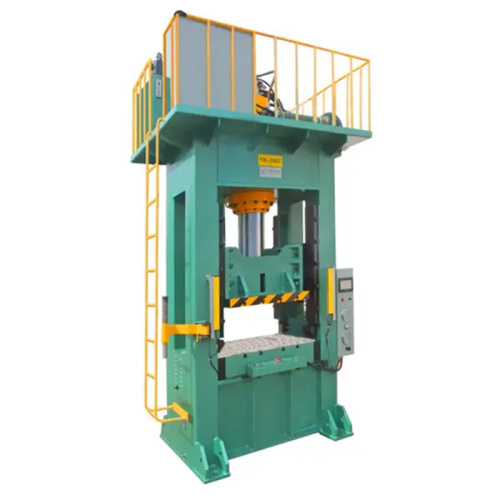
Discover why 80% of factories are switching to our 50T press. Engineered for demanding production environments, it combines powerful performance, reliable operation, high precision, and energy-efficient technology in one durable solution. Its robust design delivers consistent results, minimizes downtime, and helps reduce maintenance costs, allowing manufacturers to streamline production and improve overall efficiency. With dependable performance and long-term value, this 50T press gives factories the confidence to increase productivity while maintaining excellent quality.


Many factories need a press that can handle regular production work without taking up excessive floor space or creating complex maintenance tasks. A 50-ton press often fits this gap. It can provide enough force for many forming, bending, pressing, and assembly jobs while remaining easier to install than a much larger machine.
The claim that “80% of factories choose our 50T press” should be supported by clear sales data. I prefer to explain the real reasons buyers consider this model instead of relying on a broad number.
A practical force range for common jobs
A 50-ton press can suit tasks such as:
The correct capacity depends on the material, part size, tooling, stroke, and working speed. A factory should not select a press only by looking at the maximum tonnage. I usually ask customers to share the material type, product drawing, workpiece size, and daily output target before recommending a machine.
A press that is too small may work under constant strain. A press that is much larger than needed may increase the purchase cost, power demand, and space requirement.
A balance between capacity and factory space
Production space has a direct effect on workflow. A large machine may require extra room for loading, unloading, maintenance, and material movement. This can make the production line harder to arrange.
A 50T press can be a suitable choice for factories that need useful pressing force but do not want a heavy machine occupying a large area. The final footprint still depends on the frame design, hydraulic unit, control cabinet, safety guarding, and working table.
I recommend measuring the planned installation area before placing an order. The measurement should include:
This simple check helps prevent installation problems after delivery.
Easy operation supports steady production
Operators often prefer a machine with controls that are easy to understand. Clear pressure settings, visible gauges, stable controls, and a suitable working height can reduce unnecessary adjustments during a shift.
The press should match the operator’s real work. A machine used for repeated assembly may need a different control setup from one used for occasional repair work. Some factories may need manual operation. Others may benefit from semi-automatic controls, adjustable stroke settings, or a two-hand control system.
I focus on the working process rather than adding functions that the factory will not use. Extra features can increase cost and may make maintenance less convenient.
Hydraulic performance affects daily use
A hydraulic press should deliver stable force through its working range. The hydraulic system needs suitable components, correct oil selection, proper sealing, and regular inspection.
Before purchase, I suggest checking:
A 50-ton rating describes the available pressing force. It does not automatically describe speed, precision, cycle time, or energy use. These details should appear in the machine specification.
Tooling makes a direct difference
The same press can perform very different jobs with different dies and fixtures. A suitable tool helps keep the workpiece stable and places force in the correct position.
For example, a factory fitting metal bushings may need a guided fixture to keep the part aligned. A workshop straightening shafts may need adjustable supports. A sheet metal operation may require a forming die designed for a specific material thickness.
I ask customers to provide a sample part or drawing when possible. This allows the press size, table opening, stroke, and tooling arrangement to be checked together.
A realistic factory example
Imagine a small automotive parts supplier that needs to install bushings into metal housings. The factory processes several hundred parts each day. The work does not require a large deep-drawing machine, but the operator needs stable force and repeatable positioning.
A 50-ton hydraulic press may suit this task if the required force stays within the machine’s working range. The supplier would still need to confirm the bushing size, housing material, fixture design, cycle time, and operator safety setup. If testing shows that the required force is close to the machine limit, a higher-capacity model may be a safer choice.
This example shows why a press should be selected from production data rather than from the tonnage label alone.
Service and maintenance matter after delivery
A press becomes part of the production system once it arrives at the factory. Buyers need access to manuals, wiring information, hydraulic diagrams, maintenance guidance, and replacement parts.
Routine checks may include:
The maintenance schedule should follow the machine manual and the actual working conditions. Dust, high temperature, heavy cycles, and poor oil quality can affect service needs.
I also recommend asking about training and remote support before purchase. A clear answer about service arrangements can be more useful than a broad performance promise.
A 50T press can be a practical choice for many factories because it may offer a workable mix of force, size, operation, and maintenance needs. The right decision depends on the product, tooling, cycle time, installation area, and safety requirements.
When a factory has clear production data, the 50-ton rating becomes only one part of the decision. The better question is whether the machine can perform the required job with suitable control, stable operation, and support that fits the factory’s working conditions.

A 50-ton press must do more than deliver force. It needs steady pressure, safe operation, simple controls, and enough flexibility for daily production.
Many factories face the same problems: uneven forming results, slow tool changes, high maintenance needs, and equipment that cannot adapt when the product range changes. A press may look strong on paper, yet its value is decided by what it can do across a normal production week.
This is where a 50-ton hydraulic press can fit.
The machine provides up to 50 tons of pressing force for tasks such as:
The actual working result depends on the material, die design, stroke, pressure setting, and operator method. I always recommend checking these details before choosing a machine.
A press used by many factories needs to support repeatable work, not just one successful test. Operators should be able to set the pressure and stroke without a long learning process. The frame should remain stable under load. The worktable should support the tooling used in daily production.
The claim that this 50-ton press is trusted by 80% of factories should be used only when supported by sales records, customer data, or a clearly defined market sample. A reliable product page should explain where the figure comes from. Customers can also ask for:
Clear data builds more confidence than a large percentage without context.
When I evaluate a 50-ton press, I check several practical points.
Pressure control
The operator needs a clear way to adjust working pressure for different materials and tools. A setting that works for a steel plate may not suit a softer component. Smooth adjustment can reduce damage to the part and help keep production results consistent.
Frame strength
A press frame must handle repeated loading. Look at the frame structure, weld quality, guide design, and signs of deflection under pressure. A strong frame supports better alignment between the workpiece and the tooling.
Stroke and working area
The maximum stroke and daylight determine what the machine can process. A press may provide enough force but still be unsuitable if the workpiece does not fit in the working area. Check the opening height, table size, throat depth, and ram movement against your actual parts.
Ease of operation
Simple controls can reduce setup errors. A pressure gauge, guarded working zone, emergency stop, and clear operating instructions give the operator better control over the process. Safety equipment should match local workplace requirements.
Maintenance access
Hydraulic hoses, seals, valves, and oil systems need regular inspection. Components that are easy to access can reduce service time. Ask about recommended oil, inspection intervals, spare parts, and technical support before placing an order.
Application testing
A sample test can answer questions that a brochure cannot. Send the supplier the material type, part size, forming method, tool drawing, and expected output. Ask for test photos, pressure data, cycle details, and any limits found during the test.
A small metalworking supplier in Southeast Asia faced uneven results when straightening welded brackets. The operator had to adjust the setup by hand for each batch, which caused variation between parts. After reviewing the bracket size and tool layout, the supplier selected a hydraulic press with adjustable pressure and a fixed support fixture. The machine did not remove every production challenge, but it made the setup easier to repeat and reduced manual adjustment.
This example shows why machine selection should begin with the workpiece, not only the tonnage number.
A 50-ton press may be suitable for your factory when:
It may not be the right choice for heavy deep drawing, large structural components, or work that needs more force and a wider working area. In those cases, a higher-capacity model or a different press design may be more suitable.
Before purchase, prepare a short equipment checklist:
The value of a 50-ton press is not measured by force alone. It comes from the match between the machine and the job. A transparent supplier should explain the specifications, state the working limits, and support the product claim with evidence.
If your factory is considering this type of equipment, share the part drawing, material details, tooling plan, and expected production volume with the supplier. A proper review can help you decide whether a 50-ton press fits your process or whether another model would be a better choice.
A production line can lose time when a press lacks enough force, takes too long to set up, or gives uneven results from one cycle to the next. I often see this in workshops making brackets, plates, bushings, and formed metal parts. The machine may still run, but operators spend more time adjusting tools, checking parts, and handling rework.
A 50T press can give these operations a practical balance of force, working space, and daily usability. The right choice depends on the material, tooling, stroke, working height, and cycle needs. Press capacity alone does not decide whether a machine fits a production task.
I start by checking the forming or pressing job.
These questions help prevent a common purchasing mistake: selecting a press based only on the “50T” label.
For workshops producing small and medium-sized parts, a 50T press may support tasks such as:
The frame and hydraulic system should match the work. A strong frame helps maintain alignment during loading. A stable hydraulic circuit can help the operator control pressing speed and pressure. The control layout also matters. When gauges, buttons, and adjustment points are easy to reach, operators can spend less time leaving the work area to make basic changes.
I recommend reviewing these machine details before placing an order:
Rated force
Confirm that the 50T rating matches the actual process. The required force may change with material grade, thickness, tool shape, and contact area. A supplier should be able to explain how the rating applies to your job.
Working area
Measure the largest part and tool set that will enter the press. A machine may have enough force but not enough space for safe and comfortable loading.
Stroke and daylight
Stroke controls how far the ram moves. Daylight describes the available space between the working surfaces. Both dimensions affect tool setup and part access.
Control method
A manual setup may suit low-volume work. A powered or semi-automatic control system may fit repeated operations. The control design should match operator skill, production rhythm, and safety procedures.
Tool compatibility
Check the table, ram, mounting points, and available accessories. A press becomes more useful when the tooling can be changed without major modification.
Safety features
Look for guarding, emergency stop access, stable support, clear operating instructions, and protection against unintended movement. Operators should receive training before using the machine.
A small fabrication workshop can use this approach when replacing an older press. The team may discover that most of its work involves straightening frames and installing bushings, not heavy stamping. A 50T hydraulic press with suitable tooling could meet those jobs, while a larger machine might take more floor space and require higher operating costs. The final choice should come from measured work requirements rather than a larger number on a product sheet.
Maintenance also affects production results. Operators can inspect hydraulic lines, fittings, ram movement, table supports, and control switches as part of a regular check. Any leak, unusual noise, slow movement, or loss of pressure should be reported and assessed before the press returns to normal use. The maintenance schedule should follow the supplier’s instructions and the working environment.
Before comparing suppliers, I prepare a short requirement list:
This list makes supplier replies easier to compare. It also helps reveal where a standard machine may need adjustments.
A 50T press can support many workshop and production tasks when its force, dimensions, tooling, and controls match the job. The best result comes from connecting the machine specification with the actual process. I would test the intended material and tooling, confirm the rated limits, review safety measures, and ask for clear service information before making a purchase.
We has extensive experience in Industry Field. Contact us for professional advice:Hu: dgliheng168@163.com/WhatsApp +8613509684273.
Robert H. Todd, 2018, Manufacturing Processes Reference Guide
John A. Schey, 2000, Introduction to Manufacturing Processes
Mikell P. Groover, 2020, Fundamentals of Modern Manufacturing
Society of Manufacturing Engineers, 2019, Metal Forming and Pressworking Technology
International Organization for Standardization, 2015, Safety of Machinery General Principles for Design
American Society of Mechanical Engineers, 2021, Hydraulic Presses and Industrial Safety Guidelines
Stop wasting money on excessive energy costs. The 50T press can reduce energy consumption by up to 30%, helping lower operating expenses while maintaining reliable performance. By upgrading to this
The 50T Powder Press is engineered for powerful, precise compaction, helping manufacturers achieve material densities of up to 99% while significantly reducing powder loss. Its controlled forming p
Roll smarter, not harder with Shengshi—your trusted partner in efficient, reliable, and innovative rolling solutions. Designed to enhance performance, streamline operations, and simplify every st
Tired of inaccurate rolls and inconsistent results? Try this solution to improve precision, enhance reliability, and enjoy a smoother overall experience. Designed to reduce errors and deliver more
Email to this supplier

November 11, 2026

November 10, 2026
Contact

Send Inquiry
PRODUCT CATEGORIES
Privacy statement: Your privacy is very important to Us. Our company promises not to disclose your personal information to any external company with out your explicit permission.
Fill in more information so that we can get in touch with you faster
Privacy statement: Your privacy is very important to Us. Our company promises not to disclose your personal information to any external company with out your explicit permission.