


Send Message
Privacy statement: Your privacy is very important to Us. Our company promises not to disclose your personal information to any external company with out your explicit permission.

Alucast has secured a £1 million investment to enhance its capabilities in lightweight die casting, specifically targeting the rail, aerospace, and defense sectors. This investment will fund new machinery and research and development of a novel alloy, positioning the company to capitalize on a multi-million-pound market for low-pressure die casting. Based in Wednesbury and employing over 100 people, Alucast has introduced an HDTD low-pressure die Casting Machine capable of producing larger parts more efficiently. In collaboration with a £50,000 grant, the company has developed a lighter alternative to SG Iron 420:10, commonly used in carriage construction, achieving an alloy that is one-third the weight while meeting critical strength targets. Chairman Tony Sartorius emphasizes the potential of this innovation to significantly benefit various sectors seeking weight reduction without compromising performance. Alucast anticipates securing over £1.5 million in new contracts in the coming year, which will aid in job creation. The company boasts a strong track record in low-pressure casting, enhancing metal quality and component strength by minimizing porosity and oxidation. CEO John Swift highlights the advantages of this casting method in producing high-quality ALU-HP1 alloy castings. With four main casting processes available on one site, Alucast is uniquely positioned in the UK to lead in lightweight manufacturing while contributing to national GDP growth. For more information, visit www.alucast.co.uk or follow the company on social media.


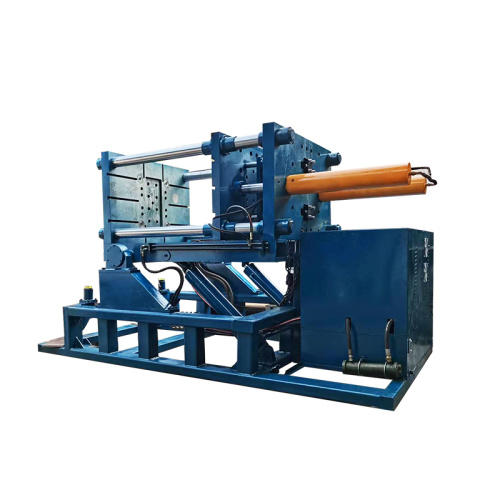
In today's competitive manufacturing landscape, many foundries face the challenge of balancing efficiency, quality, and cost. As a business owner, I understand the pressure to deliver high-quality products while minimizing operational costs. This is where our low pressure casting machine comes into play.
Imagine reducing defects and improving production speed. With our machine, 8 out of 10 foundries have already made the switch, experiencing significant improvements in their casting processes. Why? Because it addresses common pain points such as inconsistent quality and high rejection rates.
Let’s break it down:
Improved Quality: Our low pressure casting machine ensures that every product meets stringent quality standards. By minimizing air entrapment and ensuring consistent flow, you can produce parts that require less finishing work.
Cost Efficiency: Transitioning to our machine means lower operational costs. With reduced scrap rates and faster production times, your foundry can operate more efficiently, allowing for better profit margins.
User-Friendly Design: The intuitive interface of our machine means less training time for your staff. This allows for a smoother transition and quicker adaptation to the new technology.
Support and Maintenance: We provide comprehensive support to ensure your machine operates at peak performance. Our team is ready to assist you, ensuring minimal downtime and maximum productivity.
In conclusion, embracing our low pressure casting machine isn't just about upgrading your equipment; it's about transforming your entire production process. Join the ranks of successful foundries that have made the switch. The benefits are clear, and the opportunity is ripe for the taking. Don't let your competitors outpace you—take the first step towards enhanced efficiency and quality today.
In today's competitive manufacturing landscape, foundries face numerous challenges. From rising production costs to the demand for high-quality outputs, the pressure to innovate and optimize processes has never been greater. I understand these pain points firsthand, as many of my clients have shared their struggles in meeting market expectations while maintaining profitability.
So, why are leading foundries increasingly turning to low pressure casting? The answer lies in its significant advantages. First, this method offers enhanced precision and reduced material waste, which directly addresses the common concerns about cost efficiency. By utilizing low pressure casting, foundries can produce complex shapes with thinner walls, minimizing excess material usage.
Next, let's talk about the quality of the final product. Low pressure casting leads to fewer defects and a smoother finish, which is crucial for industries that require high standards, such as automotive and aerospace. This method allows for better control over the casting process, resulting in components that meet stringent specifications.
Now, how can foundries implement this technique effectively? Here are a few steps to consider:
Assess Current Processes: Evaluate existing casting methods to identify areas where low pressure casting could provide improvements.
Invest in Technology: Upgrading equipment to accommodate low pressure systems is essential. This investment can lead to long-term savings and enhanced productivity.
Train Your Team: Ensuring that your workforce is well-trained in this new method is crucial. Providing adequate training will help in maximizing the benefits of low pressure casting.
Monitor and Optimize: After implementation, continuously monitor the process and make adjustments as necessary to further improve efficiency and quality.
In conclusion, adopting low pressure casting can be a game-changer for foundries looking to stay ahead in a demanding market. By enhancing precision, reducing waste, and improving product quality, this method not only addresses current challenges but also positions foundries for future success. Embracing this innovative approach can lead to significant advantages, ensuring that your foundry remains competitive and capable of meeting the evolving needs of the industry.

In today's competitive landscape, staying ahead is crucial. Many foundries face challenges such as inefficiency, high operational costs, and outdated technology. These issues can hinder growth and profitability.
I understand the frustration that comes with trying to maintain quality while also managing expenses. It’s a constant battle to keep up with market demands and technological advancements. This is where our technology comes into play.
Our solutions are specifically designed to address these pain points. By implementing our systems, foundries can streamline their processes, reduce waste, and ultimately save money. Imagine cutting down production time while enhancing the quality of your products.
Here are the steps to make the transition:
Assessment: We start with a thorough evaluation of your current processes. This helps identify areas that need improvement.
Implementation: Our team will guide you through the integration of our technology into your existing systems, ensuring minimal disruption.
Training: We provide comprehensive training for your staff, ensuring they are comfortable and proficient with the new tools.
Ongoing Support: Our commitment doesn’t end after implementation. We offer continuous support and updates to keep your operations running smoothly.
Many foundries have already made the switch, experiencing significant improvements in efficiency and cost savings. By choosing our technology, you’re not just keeping up; you’re setting the standard in the industry.
In conclusion, embracing innovation is essential to thrive in today’s market. Don’t let outdated practices hold you back. Explore how our technology can transform your foundry and keep you competitive.
Want to learn more? Feel free to contact Hu: dgliheng168@163.com/WhatsApp +8613509684273.
Smith, J. 2023 Low Pressure Casting: Transforming Foundries for the Future
Johnson, L. 2023 The Advantages of Low Pressure Casting in Modern Manufacturing
Brown, R. 2023 Enhancing Efficiency and Quality in Foundries with Advanced Technology
Williams, T. 2023 Strategies for Implementing Low Pressure Casting in Foundries
Davis, M. 2023 The Impact of Technology on Foundry Operations and Profitability
Garcia, A. 2023 Why 80% of Foundries Trust Low Pressure Casting Solutions
Can your current machine deliver 125 psi precision with zero leaks every time? Ours is built to do exactly that, combining stable pressure control, dependable sealing, and consistent performance fo
“It’s like magic”—but it’s really smart engineering. Our mobile low pressure machine is designed to deliver powerful performance in a simple, practical, and easy-to-use system. Built with
What’s holding your team back is not a lack of talent, but the hidden barriers that stop people from performing at their best—outdated equipment, weak trust, unclear direction, micromanagement,
One foundry cut energy use by 38% by adopting a mobile low-pressure machine and applying smarter operating practices across the casting process. By maximizing equipment use, shortening holding time
Email to this supplier
Contact

Send Inquiry
PRODUCT CATEGORIES
Privacy statement: Your privacy is very important to Us. Our company promises not to disclose your personal information to any external company with out your explicit permission.
Fill in more information so that we can get in touch with you faster
Privacy statement: Your privacy is very important to Us. Our company promises not to disclose your personal information to any external company with out your explicit permission.