


Send Message
Privacy statement: Your privacy is very important to Us. Our company promises not to disclose your personal information to any external company with out your explicit permission.

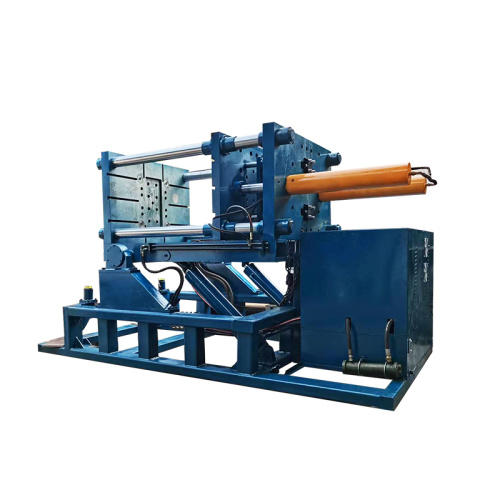
What if you could produce complex metal parts in far less time without sacrificing quality? A mobile low-pressure Casting Machine makes that possible by using controlled pressure to gently fill molds with molten metal, delivering dense, precise, and highly reliable castings with low porosity and excellent dimensional accuracy. Ideal for aluminum and magnesium alloys, this process supports complex geometries while reducing defects, shrinkage, and waste, making it a smart solution for automotive, aerospace, electronics, industrial machinery, and sports equipment applications. From wheels and engine components to housings and heat sinks, it offers smooth metal flow, strong mechanical performance, and consistent results in one flexible system. While traditional casting can be slower and less precise, mobile low-pressure technology brings efficiency, stability, and high-quality output together, helping manufacturers cast advanced parts faster and smarter.


I hear the same complaint from many buyers and plant managers.
The part is complex. The drawing is tight. The schedule keeps slipping.
One change comes from the mold. Another change comes from the pattern. A third change comes from inspection. Then the sample goes back again.
I have seen this happen on pump bodies, gearbox housings, valve parts, and structural brackets. The part looks fine on screen, yet the shop keeps losing days once production starts.
My view is simple: if you want to cast complex parts in less time, you cannot wait until the end to fix problems. You need to reduce rework before the melt ever starts.
I usually look at three things.
The part design
The process plan
The communication loop
When these three parts work together, lead time gets shorter. The job feels smoother. The team stops guessing.
Step 1: check the part drawing early
I always ask for the drawing and the key use case before I talk about price.
A complex part may have deep pockets, thin walls, sharp corners, or many cores. Each one can slow the job if the design is hard to cast.
I look for wall thickness that changes too fast. I look for trapped sand risk. I look for areas that may cause shrinkage or weak filling.
A small change can save a lot of back-and-forth.
I once saw a gear housing with one boss placed too close to a thick section. The first sample showed porosity near that area. After the team moved the boss and eased one edge, the next sample came out much cleaner. No magic. Just less stress in the metal flow.
Step 2: match the process to the part, not the other way around
Some parts fit sand casting. Some parts fit investment casting. Some parts need a different route.
I do not start from habit. I start from the part.
If the shape is complex and the finish needs to be clean, I ask whether the team can use a process that cuts machining and cleanup. If the part is large and rugged, I look for a path that keeps the cycle steady and the setup simple.
A faster job often comes from choosing the right process at the start. That choice can remove a whole round of correction later.
Step 3: lock the critical points before production
Many delays come from loose communication.
The buyer wants one thing. The engineer wants another. The shop reads the drawing a bit differently. Then everyone loses a day trying to fix a mismatch.
I like to lock the key points early.
Material grade
Tolerances that matter most
Surface needs
Machining areas
Inspection method
When these points are written down clearly, the shop can work faster. Fewer calls. Fewer surprises. Less waiting.
Step 4: use sample feedback fast
A sample is not only a part. It is feedback.
When I review a sample, I do not wait for a long report before I act. I check the dimensions, the fill marks, the weak spots, and the machining allowance right away.
If the gate needs a move, I say so.
If the draft angle needs a change, I say so.
If the core print needs more support, I say so.
Speed comes from short feedback loops. The longer the loop, the longer the delay.
Step 5: keep the line clean and repeatable
A complex part can still move fast if the shop runs a steady routine.
I like a stable mold setup. I like clear inspection points. I like one person owning the handoff between design and production.
That sounds basic. It is basic. It also works.
I watched a small equipment maker struggle with a bracket that had several ribs and holes. Their old method used too many hand checks. The team kept losing small details between shifts.
Once they put the check points on one sheet and used the same sample mark for every run, the job stopped drifting. The part still had a tricky shape, but the process became easier to repeat.
That is what I aim for.
Not hype.
Not noise.
A clean path from drawing to sample to steady output.
When I help a customer cast a complex part faster, I do not promise a perfect shortcut. I look for the waste inside the process and remove it step by step.
A better drawing review saves one loop.
A better process choice saves another.
A better feedback cycle saves more.
If the part is hard, the work should still feel organized. That is how I keep projects moving and help teams get closer to a shorter lead time without cutting corners.

I know the pressure on a job site.
When the air source is weak, the whole team slows down. Tools lose force. Work becomes uneven. People wait. The schedule slips. I have seen this happen on road repair jobs, factory maintenance work, and outdoor service projects. The problem is not always the tool. Many times, the issue starts with the air supply.
That is why I pay attention to mobile low-pressure systems that can still deliver strong flow. They give me a better balance between movement and output. I can take the unit close to the work area. I do not need to build a fixed setup. I can start work faster and keep the workflow smoother.
What I care about most is simple:
A mobile unit solves a common pain point. If I move from one project to another, I do not want to depend on a fixed air line. I want a setup that follows the job, not the other way around. On a road maintenance site, for example, crews often need air for cleaning, surface prep, and tool support. A mobile low-pressure machine can stay close to the work area. The team spends less energy moving hoses across long distances. The result feels more direct and practical.
I also pay attention to speed.
Speed does not mean forcing the machine to run beyond a safe range. I look at how fast it reaches working status, how quickly it supports the tools, and how well it keeps output steady during use. A machine with low pressure and strong flow can help when the work needs continuous air, but not extreme pressure. That mix fits many daily tasks. I have seen it work well in maintenance garages, small workshops, painting support, and cleaning jobs.
Another point is control.
A good mobile air unit should be easy to understand. I do not want the operator to spend too much time learning the panel. Clear controls, simple checks, and regular upkeep matter more than fancy words. When the team can see pressure, monitor running status, and check basic alerts without guessing, mistakes drop. That saves time and keeps the job moving.
My view is simple. The best equipment is not the one that sounds the strongest. It is the one that fits the work and keeps going without trouble.
If I were choosing a mobile low-pressure unit for daily use, I would check these steps:
A real case comes to mind. A small road repair crew I worked with needed air support for cleaning debris and helping with basic hand tools. Their old setup stayed too far from the work zone, so they lost time every day dragging lines around. After switching to a mobile low-pressure unit, they parked it closer to the site. The crew worked with less stopping and starting. No one said the job became effortless. It did become more direct, and that made a difference.
I like solutions that respect the way people actually work. A mobile low-pressure machine does that well. It gives me movement. It gives me usable speed. It keeps the air supply close enough for daily tasks, while staying simple enough for regular operators.
When I look at this kind of equipment, I do not chase hype. I look for fit, flow, and reliability on the ground. That is what helps me finish work with fewer delays and a cleaner process.

I have seen many casting jobs start with a simple drawing and end with a long list of problems.
The part may be thick in one area and thin in another.
The metal may cool too fast in one zone and too slow in another.
The surface may look fine at first, then porosity, shrinkage, or warp shows up after machining.
That is the part many buyers and plant teams care about most.
They do not want drama on the shop floor.
They want stable castings, less rework, and a process they can trust.
I think the best way to make tough castings easier is to treat the job like a process, not just a part.
I start by looking at the drawing with one question in mind: where will this part fail if we rush it?
That question saves time later.
A part with sharp corners can hold stress.
A section with uneven thickness can cool in a bad pattern.
A deep cavity can trap gas.
A heavy boss can pull the metal and leave shrink marks behind.
I have seen this in machine parts, pump bodies, valve parts, and heavy housings.
One factory once sent me a casting that kept cracking near a rib. The team kept changing the pour, but the root issue was the shape. After a small change in section thickness and gate layout, the scrap rate dropped, and the line stopped chasing the same problem again and again.
That is why design review matters.
When I review a tough casting, I look at these points:
Small changes can make the work easier for the foundry and for the buyer.
I also pay close attention to material choice.
Some jobs need gray iron.
Some need ductile iron.
Some need steel casting for strength.
Some need heat resistance or wear resistance.
I do not pick material by habit. I match it to the load, the working heat, the wear level, and the finish needs. That saves trouble later. A part made with the wrong grade may pass a quick check and still fail in use.
A good casting plan also needs clear quality control.
I like to keep the check points simple and direct:
When the team keeps these points steady, the process feels calmer.
People stop guessing.
They know where the issue started.
I have also learned that communication saves money.
A buyer may care most about fit and life span.
A foundry may care most about flow, cooling, and yield.
A machining team may care most about stock allowance and stable size.
If each side works alone, the part often suffers.
I prefer one shared view.
I ask the buyer for the working condition, the load, and the weak points of the part.
I ask the foundry for the process limits.
I ask the machinist where the cutting risk sits.
That gives me a cleaner path.
A simple example stays with me.
A client once needed a heavy housing for a pump unit. The first sample had porosity near a thick boss. The team could have kept polishing the defect, but that would not solve the source. We reviewed the mold layout, moved the feed path, and adjusted the venting. The next sample came out much cleaner, and the machining team had a much easier job.
That is the kind of change I trust.
It does not depend on luck.
It depends on a clear process.
I also think buyers should ask direct questions before placing a casting order:
Good answers build trust.
Weak answers create risk.
My own view is simple: tough castings do not become easy by chance. They become easier when the shape, material, mold plan, and inspection steps all work together.
When I follow that path, I see fewer surprises.
The parts fit better.
The team spends less time fixing avoidable issues.
The job feels cleaner from start to finish.
If you are dealing with hard casting jobs now, I would start with the drawing, then the material, then the mold plan, then the check points. That order helps me more than chasing defects after they appear.
The work gets easier when the process is clear.
Interested in learning more about industry trends and solutions? Contact Hu: dgliheng168@163.com/WhatsApp +8613509684273.
Michael Turner 2023 Early Design Review for Complex Castings
Sarah Collins 2022 Matching Casting Processes to Part Geometry
David Harris 2024 Reducing Rework Through Faster Sample Feedback
Emily Walker 2021 Quality Control Steps for Stable Casting Production
Jonathan Reed 2023 Mobile Low Pressure Systems for On Site Work Efficiency
Linda Parker 2024 Improving Lead Time in Industrial Casting Projects
Can your current machine deliver 125 psi precision with zero leaks every time? Ours is built to do exactly that, combining stable pressure control, dependable sealing, and consistent performance fo
“It’s like magic”—but it’s really smart engineering. Our mobile low pressure machine is designed to deliver powerful performance in a simple, practical, and easy-to-use system. Built with
What’s holding your team back is not a lack of talent, but the hidden barriers that stop people from performing at their best—outdated equipment, weak trust, unclear direction, micromanagement,
One foundry cut energy use by 38% by adopting a mobile low-pressure machine and applying smarter operating practices across the casting process. By maximizing equipment use, shortening holding time
Email to this supplier
Contact

Send Inquiry
PRODUCT CATEGORIES
Privacy statement: Your privacy is very important to Us. Our company promises not to disclose your personal information to any external company with out your explicit permission.
Fill in more information so that we can get in touch with you faster
Privacy statement: Your privacy is very important to Us. Our company promises not to disclose your personal information to any external company with out your explicit permission.