

Send Message
Privacy statement: Your privacy is very important to Us. Our company promises not to disclose your personal information to any external company with out your explicit permission.

Is your old 50-ton hydraulic press truly obsolete? Not necessarily. If it still delivers reliable pressure, consistent results, and acceptable cycle times, it may remain a practical choice for basic pressing applications. However, aging equipment can bring higher maintenance costs, frequent breakdowns, safety concerns, and costly downtime. Modern 50-ton hydraulic presses often provide greater precision, improved energy efficiency, automated controls, and enhanced operator protection. The right decision depends on more than the machine’s age. Compare productivity, repair expenses, operating efficiency, safety performance, and future production demands. If maintenance costs continue to rise or outdated technology limits output, upgrading may offer better long-term value than keeping the old press in service.

I often hear the same concern from fabrication shops, repair garages, and maintenance teams: “Our 50T hydraulic press still works, but every job seems to take longer.”
An old press may not stop production completely. It can create smaller problems that add up through the day—slow ram movement, uneven pressure, oil leaks, inaccurate readings, and repeated adjustments. When operators spend extra time checking each part, the machine starts to affect labor costs, output, and work quality.
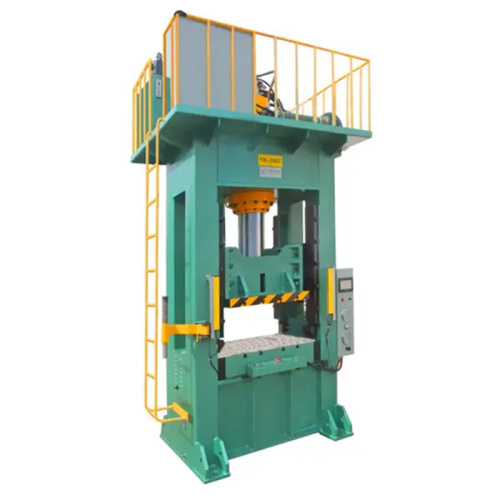
A 50T hydraulic press can be useful for many tasks, including:
The rated force may still meet your needs. The real question is whether the machine delivers that force in a stable and practical way.
I would look at the machine’s daily behavior before deciding whether to repair or replace it.
A ram that moves slowly can point to worn seals, contaminated hydraulic oil, a weak pump, or restricted flow. If the ram drifts after the pump stops, the cylinder or control valve may need attention.
Pressure readings also matter. A gauge that stays stuck, changes sharply, or does not match the actual work result can make the operator rely on guesswork. Pressing force should be easy to monitor during each job.
Leaks are another warning sign. A small oil spot under the press may appear harmless, yet repeated leakage can reduce system pressure and create a slippery work area. Hydraulic oil on the floor also adds cleaning and maintenance work.
The frame and bed deserve a close check. Cracks, heavy wear, bent plates, damaged pins, or uneven support points can affect how force moves through the workpiece. A press can have a strong hydraulic system and still produce poor results if the frame is no longer aligned.
I do not recommend replacing a press based on age alone. Some older machines remain useful after a proper service. The decision becomes easier when the shop records what the machine is costing.
Track these items for several weeks:
A repair may be a sensible choice when the frame is sound and the hydraulic faults are limited to seals, hoses, gauges, or oil.
Replacement may fit better when several systems show wear at the same time. A weak pump, damaged cylinder, poor alignment, and unreliable gauge can require repeated service visits. The repair invoice may not show the full cost of lost production.
The label “50T” only describes the rated pressing force. It does not tell me how well the machine will fit a specific shop.
I would check the working width and daylight opening first. A press with enough force may still be difficult to use if the workpiece cannot fit between the bed and ram.
Bed height adjustment also affects daily work. A movable bed with secure support points can make different jobs easier to set up. The adjustment method should match the weight of the parts handled in the shop.
Ram travel, control type, pressure gauge position, and return speed also deserve attention. A hand-operated press may suit low-volume repair work. A pneumatic or electric hydraulic system may reduce manual pumping when the press is used throughout the day.
The frame should match the work, not only the force rating. Pressing a bearing, straightening a shaft, and bending plate place different demands on setup and alignment. I would ask the supplier for load charts, working dimensions, service information, and the recommended operating limits.
A vehicle repair shop may use a 50T press to remove seized bearings and bushings. The old machine still reaches the needed pressure, but the ram returns slowly and the gauge is hard to read. Each job takes extra setup time, and technicians need to stop and check the pressure more often.
A service inspection may show that the frame is in good condition. Replacing the gauge, hydraulic seals, and oil could restore normal operation. If the cylinder is worn and the pump also lacks stable pressure, a new press may provide a more predictable workflow.
The right choice depends on the machine’s condition, repair cost, work volume, and space available. A new press is not automatically the better option, and a low repair price does not always solve the wider production issue.
Before ordering a replacement, inspect the frame, cylinder, pump, hoses, control valve, gauge, bed, pins, and safety features. Review the machine’s maintenance records and ask operators which problems appear most often.
Before approving a repair, ask for a clear list of parts, labor, expected service life, and testing steps. The press should be checked under controlled conditions after service.
For any 50T hydraulic press, safe operation depends on correct setup, suitable tooling, stable support, and regular inspection. Operators should follow the manufacturer’s instructions and stop using the machine when cracks, uncontrolled movement, or major hydraulic leaks appear.
An old press may be holding back the shop, but the answer is not always a bigger machine. A careful inspection can show whether a focused repair will restore useful performance or whether replacement makes more sense for the work ahead.

When I ask myself, “Should I upgrade or keep what I already have?” I do not start with the newest model. I start with the problem in front of me.
A new phone, laptop, camera, or software plan can look attractive, but a higher price does not always mean a better fit. I may only need longer battery life, more storage, faster work, or support for a newer app. If my current device already handles those tasks, keeping it may be the more practical choice.
The right decision comes from daily use, not from launch-day excitement.
Check what is causing the problem
I write down the issues I face during a normal week.
This list helps me separate a real need from a passing interest. A scratched case is different from a broken charging port. A slower camera is different from a camera that cannot support my work.
Look at the cost of keeping it
Keeping an old device is not always free. I may spend money on repairs, replacement parts, extra storage, or accessories. I may also lose time when the device freezes or takes longer to complete simple tasks.
I once worked with a small business owner who used a four-year-old laptop for invoices and customer messages. He planned to replace it because newer models looked more appealing. After checking his workflow, we found that the main issue was a worn battery and a nearly full drive. A battery replacement and file cleanup solved most of the trouble at a much lower cost.
That solution did not make the laptop new. It made the laptop suitable again.
Compare the upgrade with your actual needs
I avoid comparing a current device with every feature on a new model. I compare only the features that affect my work or daily life.
For example, a new laptop may offer a faster processor, a brighter screen, and more memory. If I edit video every week, those changes may save time. If I mainly browse the web, write documents, and join video calls, the difference may be less useful.
A simple table can make the choice easier:
| Need | Current device | New option |
|---|---|---|
| Daily speed | Acceptable or slow | Faster |
| Battery | Enough or weak | Longer expected use |
| Storage | Enough or full | More space |
| Software support | Supported or limited | Supported |
| Repair cost | Low or high | Not needed at the start |
| Total cost | Repair and accessories | Purchase and setup |
I pay attention to the last line. The purchase price may not include a case, charger, software, data transfer, service plan, or setup time.
Check software and security support
A device can still look and feel fine while becoming less suitable for newer software. I check whether the manufacturer continues to provide system updates and security support. I also check whether the apps I use still work with the current system.
This matters more to me than a small change in appearance. If I use the device for business files, online payments, customer data, or private messages, reliable support becomes part of the buying decision.
I do not assume that every older product is unsafe or that every newer product solves every risk. I check the support information from the manufacturer and consider how I use the device.
Estimate how long the current device can serve me
I ask a practical question: “Can this product serve my needs for another year?”
The answer does not need to be exact. I look at its current condition, repair history, software support, and performance under normal use.
Keeping the device may make sense when:
An upgrade may make sense when:
Avoid using monthly payments to hide the full cost
A small monthly payment can make an upgrade appear easier to accept. I still calculate the full amount.
I include:
I also consider whether the new product will remain useful after the payment period ends. A lower monthly figure does not change the total amount paid.
Test the new option before making a decision
When possible, I visit a store, borrow a similar model, or use a trial period. I test the tasks that matter to me instead of checking features one by one.
I open the apps I use, transfer a large file, make a video call, test the keyboard, check the screen in my usual environment, and hold the device for several minutes. Small details can affect daily comfort more than a specification sheet suggests.
If I cannot test the product, I read the return policy and warranty terms before buying. I look for clear information about the return window, condition requirements, shipping, and repair process.
Use a short waiting period for non-urgent upgrades
When my current device still works, I give myself a little time before buying. I save the product page, write down the reason for upgrading, and return to the decision after a few days.
If my reason still connects to a daily problem, I continue comparing options. If the reason was only a new color, a launch event, or a feature I will not use, keeping my current device may be the better choice.
This pause is not about rejecting new technology. It helps me choose based on use rather than pressure.
Think about the second life of the old product
If I upgrade, I plan what happens to the old device. I may sell it, give it to a family member, use it as a backup, or recycle it through a suitable program.
Before passing it on, I remove personal accounts, back up needed files, reset the device, and check the manufacturer’s recycling guidance. I keep records of important data until I confirm that the transfer is complete.
If I keep the old product, I may extend its use with a new battery, storage cleanup, a protective case, or a repair from a qualified service provider.
The best choice is not always the newest option. I look at the work I need to do, the problems I face, the full cost, and the support available for both choices. If the current product still serves me well, keeping it can be a sensible decision. If it blocks important tasks or costs too much to maintain, an upgrade may offer a better fit.
I do not ask, “What is newer?” I ask, “What will help me use my time and money more wisely?”
A press strategy can work well for years, then start losing its effect.
The signs are often easy to spot. I may send a release and receive little response. A reporter may open the email but skip the story. My company may earn a mention, yet the coverage says very little about the people, problem, or reason behind the news.
This does not always mean the press has lost value. It may mean the message needs a change.
Many press releases focus on the company instead of the reader.
They begin with a product name, a company achievement, or a quote filled with broad claims. The story may be accurate, but it gives a journalist few reasons to continue reading.
I ask myself:
A release that answers these questions has a stronger base. A release that only repeats company language may feel like an advertisement.
A small internal update may matter to a team but hold little interest for the public.
A new office, a minor website change, or a routine staff appointment may not create a strong story on its own. The subject can gain relevance when it connects to a wider concern.
For example, a local construction company may not attract coverage by announcing a new project manager. It may attract more interest by sharing how the appointment supports safer work practices, local hiring, or a major community project. The person still matters, but the public reason gives the story more meaning.
I try to connect the announcement with a clear event, trend, customer need, or community effect.
Press materials often contain phrases such as:
These phrases sound strong but offer little detail. They also make it harder for a journalist to write a fresh article.
Clear facts work better.
Instead of saying, “Our platform delivers exceptional support,” I can write:
“Customers can now receive replies from the support team through email, chat, and phone during the same service window.”
The second sentence gives a reader something to understand. It explains what changed without making a promise that cannot be measured.
A useful test is simple: remove the company name from the release and read the remaining text. If the story loses all meaning, the message may rely too much on branding.
A press release can contain several facts, but it needs one main idea.
I often see announcements that mention a new product, a partnership, a funding round, a hiring plan, and a company milestone in the same article. Each point competes for attention.
A cleaner structure looks like this:
The main point should appear near the start. Readers should not need to reach the last paragraph to understand the announcement.
A quote should not repeat the headline.
Weak quote:
“We are delighted to announce this exciting development, which reflects our strong commitment to serving customers.”
This sentence could appear in almost any company announcement.
A more useful quote explains a decision or shares a specific observation:
“Many of our customers were asking for support outside standard office hours. We changed the service schedule after reviewing those requests and speaking with our support team.”
The speaker sounds more human because the quote gives a reason, not just praise.
I also keep quotes close to the speaker’s normal voice. Short sentences, direct wording, and a clear opinion can make the story easier to use.
A press story needs support.
Useful proof may include:
The source must be accurate and easy to check. If I use a statistic, I include its date and origin. If I describe a customer result, I make sure the customer has approved the statement.
A short example can make a broad claim more understandable.
A software company may say that its tool helps small shops manage stock. A stronger release could describe a bakery that reduced manual stock checks from several hours each week to one scheduled review. The example should reflect a real customer experience, with permission and suitable evidence.
Sending the same release to every newsroom can weaken the result.
A technology reporter may not want a general business announcement. A local editor may care more about jobs, community activity, or public services. A trade publication may focus on process details that a general news site would leave out.
I review the journalist’s recent work before contacting them. I look at the subjects they cover, the format they use, and the kind of sources they quote.
A short, relevant message often works better than a long email sent to a large list.
The message can include:
The goal is not to push the same wording everywhere. The goal is to help the journalist decide whether the story suits their audience.
Patagonia’s 2011 “Don’t Buy This Jacket” campaign gained attention because the message challenged a common retail pattern. The campaign connected the product with repair, reuse, and lower consumption. People could understand the tension in the idea, which gave journalists a reason to discuss it.
The lesson is not that every company should use a bold slogan. The useful point is that the press message had a clear position. It invited a question and connected the company to a wider issue.
A business can create interest without making extreme claims. It may share a useful change in its sector, explain a difficult decision, or show how a customer problem shaped a new service.
Press work does not end when the release is sent.
I track:
A large number of mentions does not always mean the message worked. A smaller number of relevant articles may bring more useful attention than broad coverage with no clear audience.
I also read the published stories closely. If journalists keep removing the same section, that section may not add value. If they repeatedly ask the same question, the release may need a clearer answer.
A press strategy does not need a full rewrite every month.
I can start with one release and review:
Small changes can improve clarity. A more focused story can help the right journalist understand the news without extra explanation.
When a press message stops working, I do not treat that result as a reason to make louder claims. I look at the story itself. The audience may need a clearer reason to care, the journalist may need stronger evidence, and the company may need to speak in a more natural voice.
A useful press message gives people something they can understand, check, and use. That is where a change usually begins.
Interested in learning more about industry trends and solutions? Contact Hu: dgliheng168@163.com/WhatsApp +8613509684273.
Occupational Safety and Health Administration 2023 Hydraulic Press Safety and Machine Guarding
Parker Hannifin Corporation 2022 Hydraulic System Maintenance and Troubleshooting
International Organization for Standardization 2021 ISO 12100 Safety of Machinery General Principles for Design
Reuters Institute 2023 Digital News Report and Changing Media Consumption Habits
Public Relations Society of America 2022 Effective Press Release Writing and Media Relations
Federal Trade Commission 2023 Data Security and Consumer Privacy Protection for Digital Devices
The 50T Press combines powerful 50-ton force with an ultra-fast 10-second cycle time, delivering consistent, high-precision results in every operation. Designed for demanding production environment
Discover why 80% of factories are switching to our 50T press. Engineered for demanding production environments, it combines powerful performance, reliable operation, high precision, and energy-effi
Stop wasting money on excessive energy costs. The 50T press can reduce energy consumption by up to 30%, helping lower operating expenses while maintaining reliable performance. By upgrading to this
The 50T Powder Press is engineered for powerful, precise compaction, helping manufacturers achieve material densities of up to 99% while significantly reducing powder loss. Its controlled forming p
Email to this supplier

November 14, 2026

November 12, 2026
Contact

Send Inquiry
PRODUCT CATEGORIES
Privacy statement: Your privacy is very important to Us. Our company promises not to disclose your personal information to any external company with out your explicit permission.
Fill in more information so that we can get in touch with you faster
Privacy statement: Your privacy is very important to Us. Our company promises not to disclose your personal information to any external company with out your explicit permission.