

Send Message
Privacy statement: Your privacy is very important to Us. Our company promises not to disclose your personal information to any external company with out your explicit permission.

The 40T Press combines exceptional precision with high-speed performance to meet the needs of demanding manufacturing environments. Designed for efficient and reliable operation, it delivers consistent results across a wide range of applications. Its powerful 40-ton capacity supports accurate forming and pressing, while its responsive performance helps improve productivity and reduce cycle times. Built for dependable, repeatable operation, the 40T Press is a practical solution for manufacturers seeking quality, speed, and long-term efficiency.


When I choose a 40T press, I look for two things: controlled force and steady production speed. A machine may have a 40-ton rating, yet that number alone does not tell me how well it will fit my work. Stroke length, working area, adjustment range, cycle control, and operator safety all affect the result.
A 40T press can suit many forming, bending, punching, pressing, and assembly tasks. The right choice depends on the material, tooling, part size, and daily workload.
I start by checking the force requirement.
A press should handle the task without running at its limit during every cycle. For sheet metal forming, the required force can change with material type, thickness, shape, and die design. A supplier can help calculate the load when I provide:
This step helps reduce the risk of selecting a machine that is too small for the job or larger than the process needs.
Speed also matters, but fast movement is not the only goal. I want the press to move quickly during setup and return while keeping pressing speed under control. A practical machine should support smooth adjustment so I can protect the tooling and maintain part quality.
For example, a workshop producing small steel brackets may use a 40T press for repeated punching and forming. The operator may need a shorter stroke for one die and a longer stroke for another. Adjustable settings can make the change easier, while a clear control panel can reduce setup mistakes.
Precision depends on more than the press frame. I pay attention to:
If the press applies force unevenly, the finished part may show inconsistent bends, marks, or size changes. These problems can lead to extra inspection and material waste. Good tooling and correct setup remain essential, even when the machine is well built.
The working area should match the tools I plan to use. A table that is too small can limit part placement. A large table may be useful for bigger dies, but it can also affect the space needed around the machine. I measure the tooling, part size, access space, and maintenance area before confirming the configuration.
Safety checks are part of the buying process. I look for suitable guarding, emergency stop access, two-hand controls or another appropriate control method, clear operating instructions, and maintenance access. The final setup should follow the safety requirements that apply to the installation location.
A simple review process can help:
I also ask how the 40T rating is measured. The answer should explain the rated force, operating conditions, hydraulic or mechanical system, and any limits on continuous use. Clear technical information makes comparison easier and helps prevent unsuitable purchases.
The best 40T press is not simply the one with the highest speed or the lowest quoted price. I choose based on the actual process, the tools already in use, the expected workload, and the level of control the operator needs. When force and speed are matched to the job, the press can support a more stable workflow and more consistent parts.

Heavy-duty work can become slow when a press lacks force, control, or a stable working area. I need equipment that helps me handle demanding tasks with steady pressure, clear operation, and less guesswork.
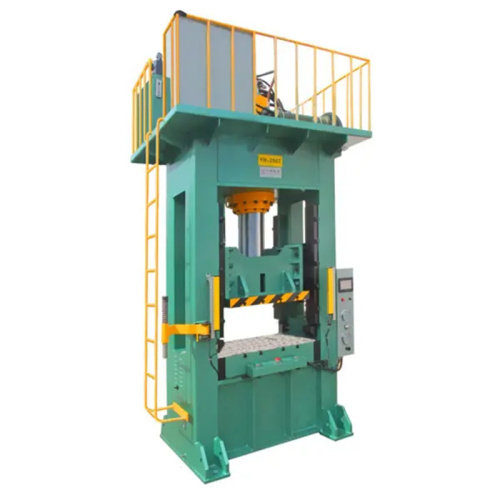
A 40T hydraulic press gives me the working force needed for jobs such as:
The 40-ton capacity refers to the maximum rated force of the press. The correct working load depends on the material, tool setup, position of the workpiece, and the manufacturer’s instructions. I always check these details before applying pressure.
When I use a press for repair work, I follow a simple process.
I inspect the frame, ram, hydraulic system, pins, and worktable before use. Any damaged part, oil leak, or loose connection needs attention before the job starts.
I place the workpiece in the center of the bed. The support blocks must sit evenly and make firm contact with the material. A tilted part can move when pressure rises, creating a safety risk.
I select pressing tools that match the shape of the job. Flat plates may work for some straightening tasks, while bearing adapters or sleeves may be needed for round parts. The tool should contact the strongest section of the workpiece.
I apply pressure slowly and watch the movement. A controlled pace helps me see whether the part is shifting, bending, or responding as expected. I avoid sudden force, off-center loading, and makeshift extensions.
I release the pressure in a steady way after the task is complete. The part should remain stable until the ram has returned and the work area is safe to access.
For example, a small vehicle repair shop may use a 40T press to remove a seized bearing from a suspension component. A hammer can damage nearby surfaces and may not provide enough control. With the part supported correctly, the press can apply force along the required line, helping the technician work with greater control.
The same approach applies to fabrication work. A metalworker may use the press to straighten a bent bracket or form a plate. The result depends on the material thickness, tool shape, pressure direction, and operator judgment. A 40T rating does not remove the need for proper setup.
I also pay attention to the working height. A suitable bed position makes it easier to align the part and maintain a clear view. Good lighting helps me check contact points, pins, and movement during the job.
Personal protective equipment remains necessary. Safety glasses, suitable gloves for the task, and work footwear help reduce exposure to common workshop hazards. I keep hands away from the pressing area and make sure other people stand clear while force is being applied.
A strong press is only useful when it matches the work. I check the rated capacity, stroke, working width, bed adjustment, hydraulic control, and available accessories before selecting a model. The right combination helps me avoid overloading the frame or forcing a part with the wrong tool.
With 40T pressing force and careful setup, I can approach heavy repair and fabrication tasks with better control. The machine supports the work, while correct alignment, suitable tools, and steady operation determine how safely and effectively each job is completed.

When a workshop handles bending, forming, pressing, or straightening work, the challenge is rarely just force. I also need steady control, a suitable working area, simple setup, and safe operation. A 40-ton press can support many of these tasks when its capacity matches the material, tooling, and work method.
I use the force rating as a starting point, not as the only buying factor. A press rated at 40 tons may perform differently across its stroke, frame design, hydraulic system, and working height. The product data should show the force range, stroke length, daylight, table size, motor details, and safety features.
A typical fabrication shop may use a 40-ton press to form steel brackets, remove pressed-in bushings, straighten small frames, or fit bearings. These jobs have different pressure and alignment needs. A wide table can help with larger parts, while adjustable supports may make smaller jobs easier to position.
My usual selection process follows a simple path:
1. Define the work
I list the parts that will go through the press and record their material, size, thickness, and shape. I also note whether the task involves pressing, bending, forming, assembly, or straightening.
This step prevents a common mistake: choosing a press only by its tonnage. A job may need less force but more working height. Another job may need a stable bed and accurate alignment.
2. Check the force requirement
The press should handle the planned task without operating at its limit for every cycle. Force calculations depend on material strength, contact area, tooling shape, friction, and the type of operation.
A machine supplier can help check the calculation when the application is not clear. I also review the rated force at the working position, since the available force can vary across the stroke on some designs.
3. Review the working space
The table width, opening height, stroke length, and ram adjustment affect how easily I can load a part.
A compact press may suit bench work and small components. A floor model can offer more room for larger assemblies. I prefer a layout that lets the operator place the part without awkward lifting or reaching.
4. Match the tooling
The press frame provides the force, but the tooling guides how that force reaches the part. V-blocks, pressing plates, punches, dies, and support blocks each serve a different purpose.
Tooling should be rated for the planned load and positioned so the force stays aligned with the ram. Off-center loading can affect the frame, bed, tooling, and workpiece.
5. Check operation and maintenance
Controls should be easy to understand. A pressure gauge can help me monitor the work without guessing. A guarded working area, stable base, emergency stop, and clear operating instructions support safer use.
Routine care may include checking hydraulic lines, inspecting pins and supports, cleaning the work area, and looking for leaks or unusual movement. Operators should follow the machine manual and use suitable personal protective equipment.
A useful example is bushing removal. The part must sit on firm supports with enough space for the bushing to pass through. I select a punch that contacts the bushing correctly, align the ram with the center, apply pressure gradually, and stop if the part shifts. The press should not be used to force a poorly supported component.
For bracket forming, I check the die width, material thickness, bend position, and required angle. A test piece can show whether the tooling and pressure setting are suitable before I process the full batch. This reduces scrap and helps protect the finished parts.
I also pay attention to the difference between speed and control. A faster cycle may reduce handling time, but the ram still needs controlled movement during contact. The right balance depends on the material and the job. A clear pressure reading and repeatable setup can make daily work easier to manage.
A 40-ton press can be a practical choice for workshops that need more capacity than a small bench press provides. The correct fit depends on the job list, available space, tooling, operator needs, and service support. I would confirm the complete specification before purchase and avoid using the rated force as a reason to exceed the limits of the machine or tooling.
Contact us today to learn more Hu: dgliheng168@163.com/WhatsApp +8613509684273.
American Society of Mechanical Engineers, March 2022, Hydraulic Press Design and Performance Standards
Robert L Norton, July 2020, Fundamentals of Metal Forming and Press Applications
International Organization for Standardization, November 2019, Safety Requirements for Mechanical and Hydraulic Presses
David A Smith, January 2021, Practical Press Tooling and Die Alignment Techniques
Manufacturing Technology Institute, September 2023, Workshop Applications of Hydraulic Press Equipment
James P Walker, May 2022, Force Control and Precision Operation in Industrial Pressing Systems
Meet 40T, a fast, precise, and reliable solution built to perform when it matters most. Designed for consistent operation and dependable results, 40T combines speed, accuracy, and stability to help
Upgrade Your Shop with 40T Power and experience dependable performance built for demanding work. Designed to deliver impressive strength, consistent results, and reliable operation, 40T technology
The 40T Hydraulic Press is built for demanding industrial pressing applications, delivering powerful force, dependable operation, and precise control. Its robust construction supports consistent pe
Say goodbye to frustrating jams and experience smoother, more reliable performance with 40T. Designed to help keep operations running efficiently, 40T delivers dependable results when you need them
Email to this supplier

September 22, 2026

September 21, 2026
Contact

Send Inquiry
PRODUCT CATEGORIES
Privacy statement: Your privacy is very important to Us. Our company promises not to disclose your personal information to any external company with out your explicit permission.
Fill in more information so that we can get in touch with you faster
Privacy statement: Your privacy is very important to Us. Our company promises not to disclose your personal information to any external company with out your explicit permission.